Anselm Jappe

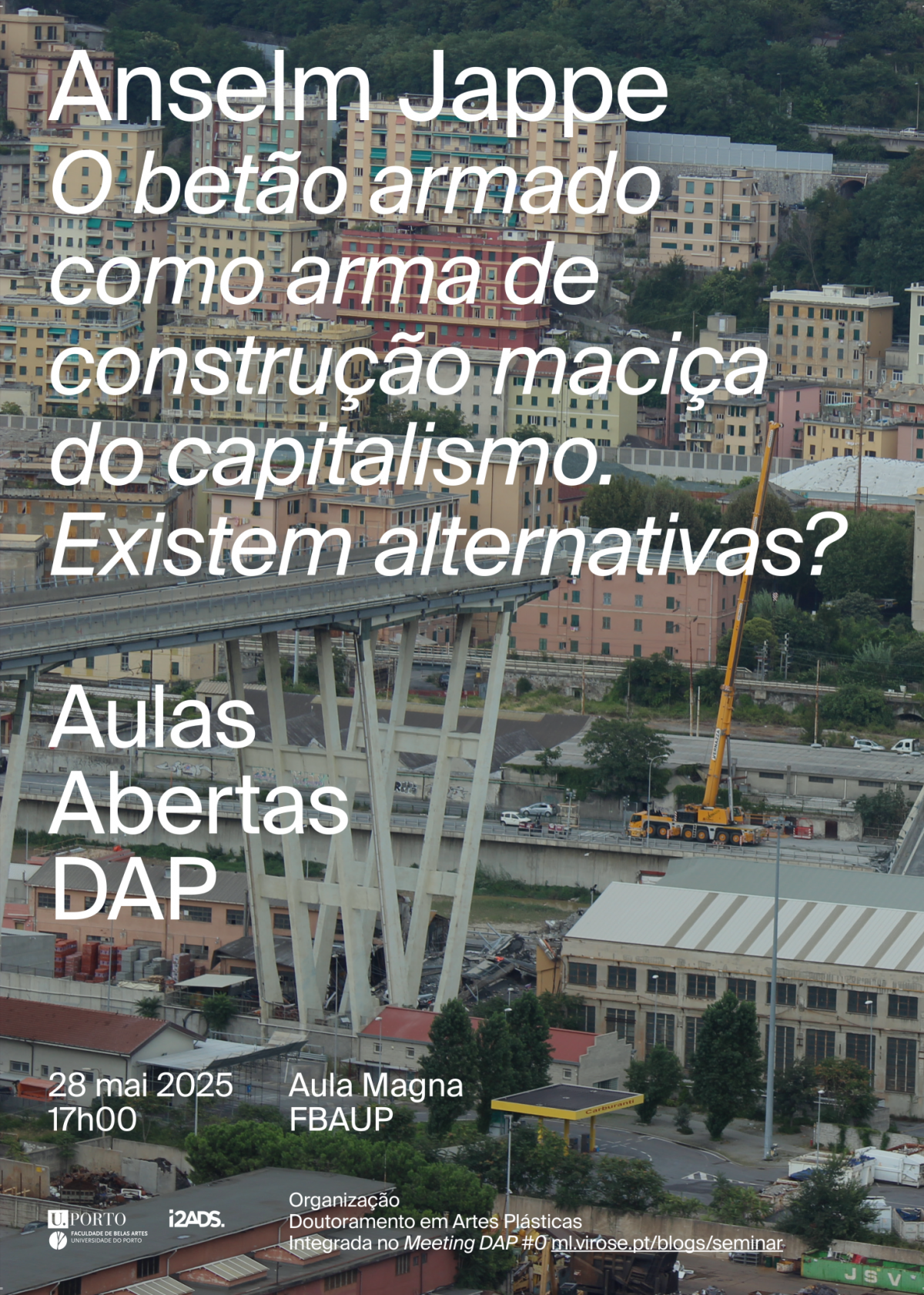
O betão armado é, desde há muito, um símbolo da modernidade. Barato, fácil de utilizar, higiénico, adequado para edifícios de qualquer dimensão. Parece satisfazer todas as necessidades: para sustentar a mania de grandeza dos poderosos, mas também para construir numerosas habitações sociais ou de “auto-construção”. No entanto, há já algum tempo que são criticados os seus numerosos defeitos, desde os impactos sobre a saúde até às suas fracas qualidades térmicas, à sua rápida obsolescência, às emissões de CO2, à extração de areia, às grandes quantidades de detritos, ao elevado consumo de solos, etc. Os edifícios de betão são muitas vezes considerados esteticamente feios e social e psicologicamente alienantes. Mas qual poderia ser a alternativa? Poderá ser a arquitetura “vernacular”, em que habitações com mil tradições são construídas com materiais locais e por artesãos locais, duráveis e com excelente desempenho térmico?
Steven Jacobs

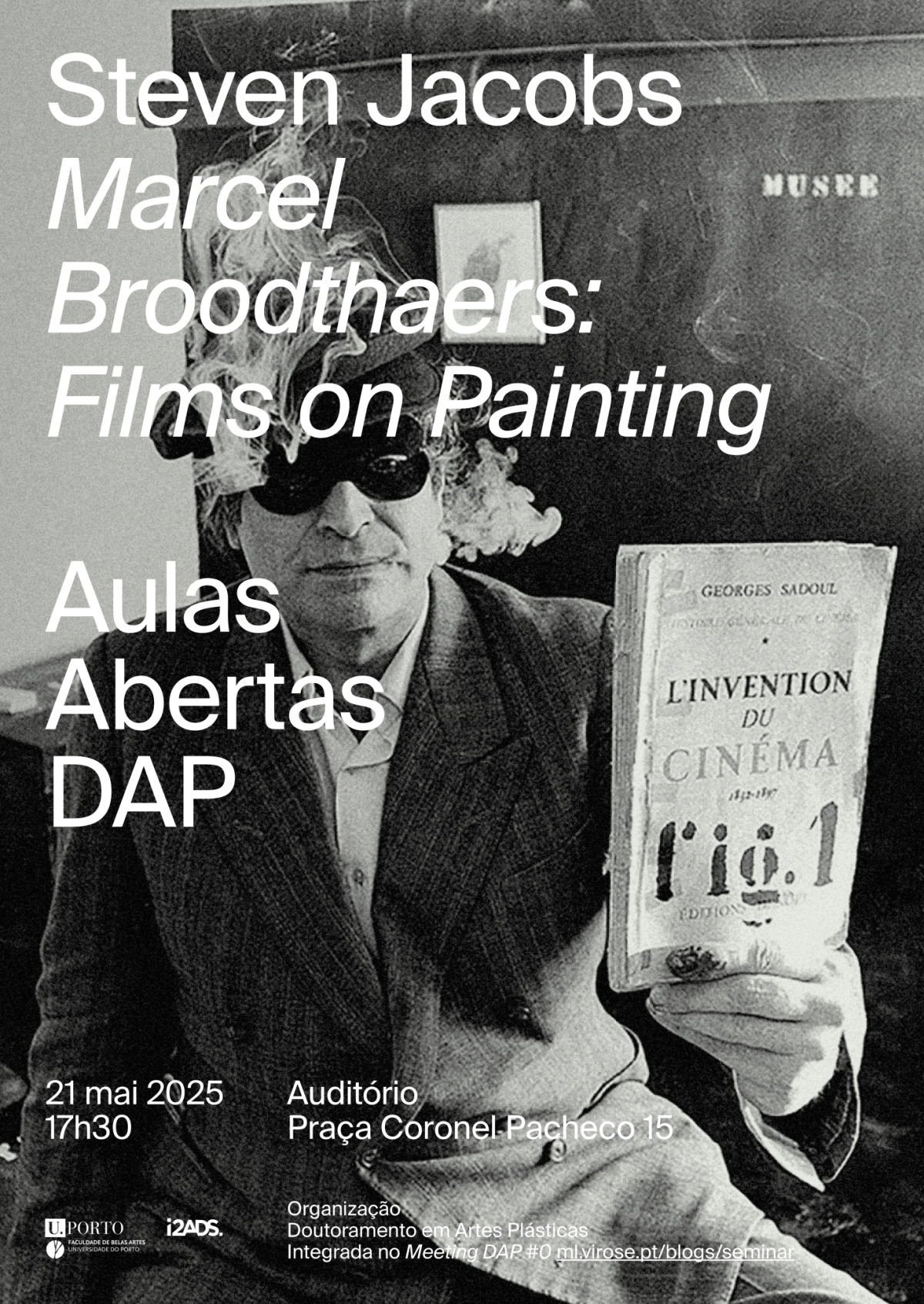
Belgian artist Marcel Broodthaers (1924-1976) is rarely seen as a filmmaker although he was a prolific one with a filmography containing at least 50 titles. Furthermore, his entire (non-filmic) oeuvre and his writings include many references to cinema, its (pre-)history, technology, and paraphernalia. Often presented as the ultimate artist of the “post-medium condition,” constantly merging artistic media, technologies, and methods of display, Broodthaers strikingly made several films dealing with still images such as inscriptions, newspaper clippings, postcards, maps, drawings, prints, and paintings.

Focusing on La Clef de l’horloge (1957-58) and A Voyage on the North Sea (1973-74), this lecture deals with Broodthaers’s cinematic exploration of paintings…

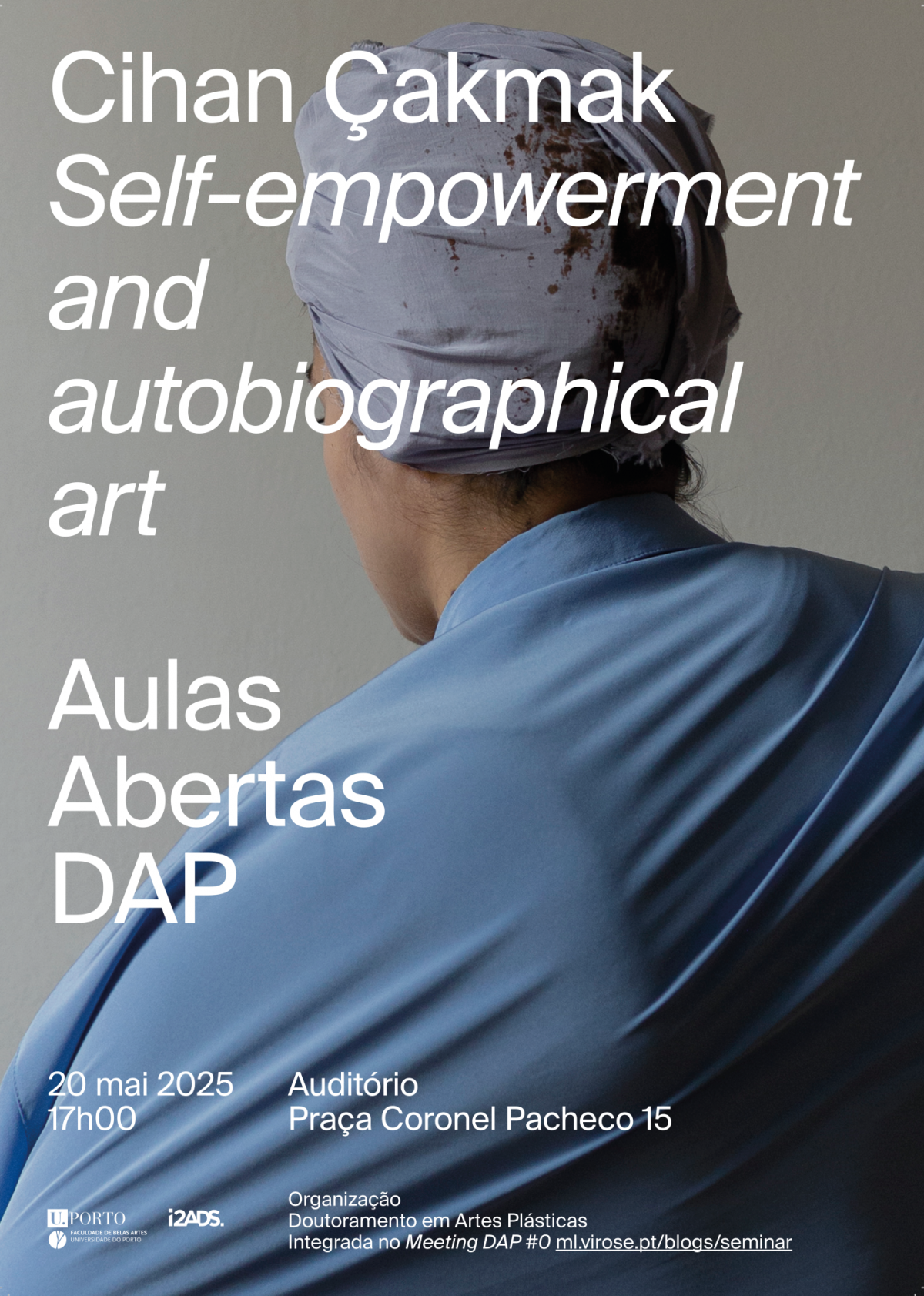
Cihan Çakmak

Cihan Çakmak will focus on photography and moved image as a tool of self-reflection and self-empowerment. 
In this context, connected to questions of heritage, origin, transgenerational trauma and fragments of the own biography, she negotiates the past and the future at the same time. She will show her works “not me not you“2024-2025 ongoing, “Where I left you” 2023, “When we leave“ 2018-2025 ongoing. These works contextualize photography as a tool to show the inner conflicts and states by using the subject of self-portraits and essayistic, auto-fictional story telling.
These issues always follow the question of identity: Who are we? Who do we want to be? How do we want to shape our relationships in context of reconnecting after trauma?

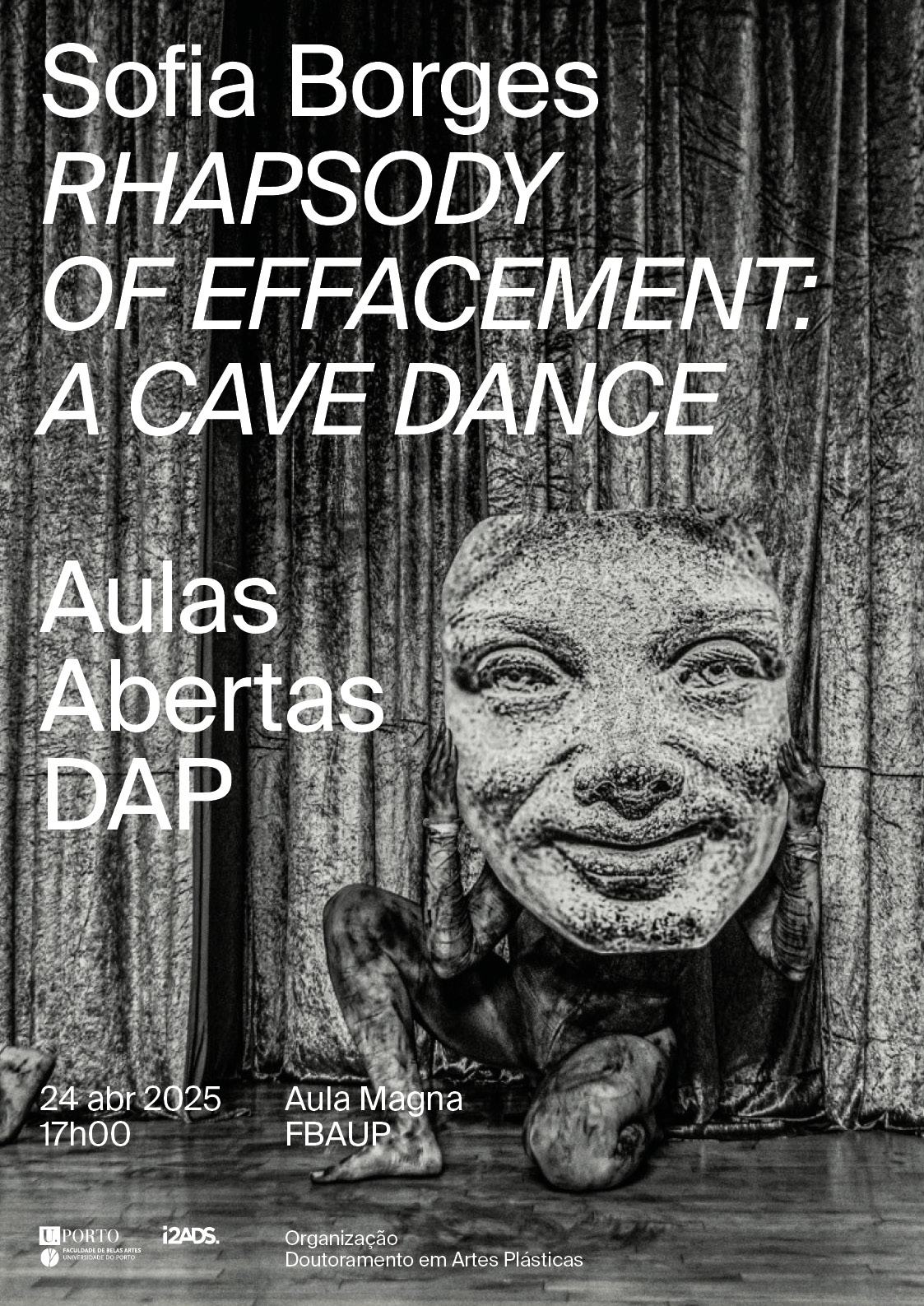
Sofia Borges

Aula aberta com a artista brasileira Sofia Borges, baseada em Nova Iorque, desta vez em colaboração com a Ciclo – Bienal de Fotografia do Porto, no contexto da residência que resultou na exposição A New Rhapsody, apresentada no Pavilhão de Exposições da FBAUP.

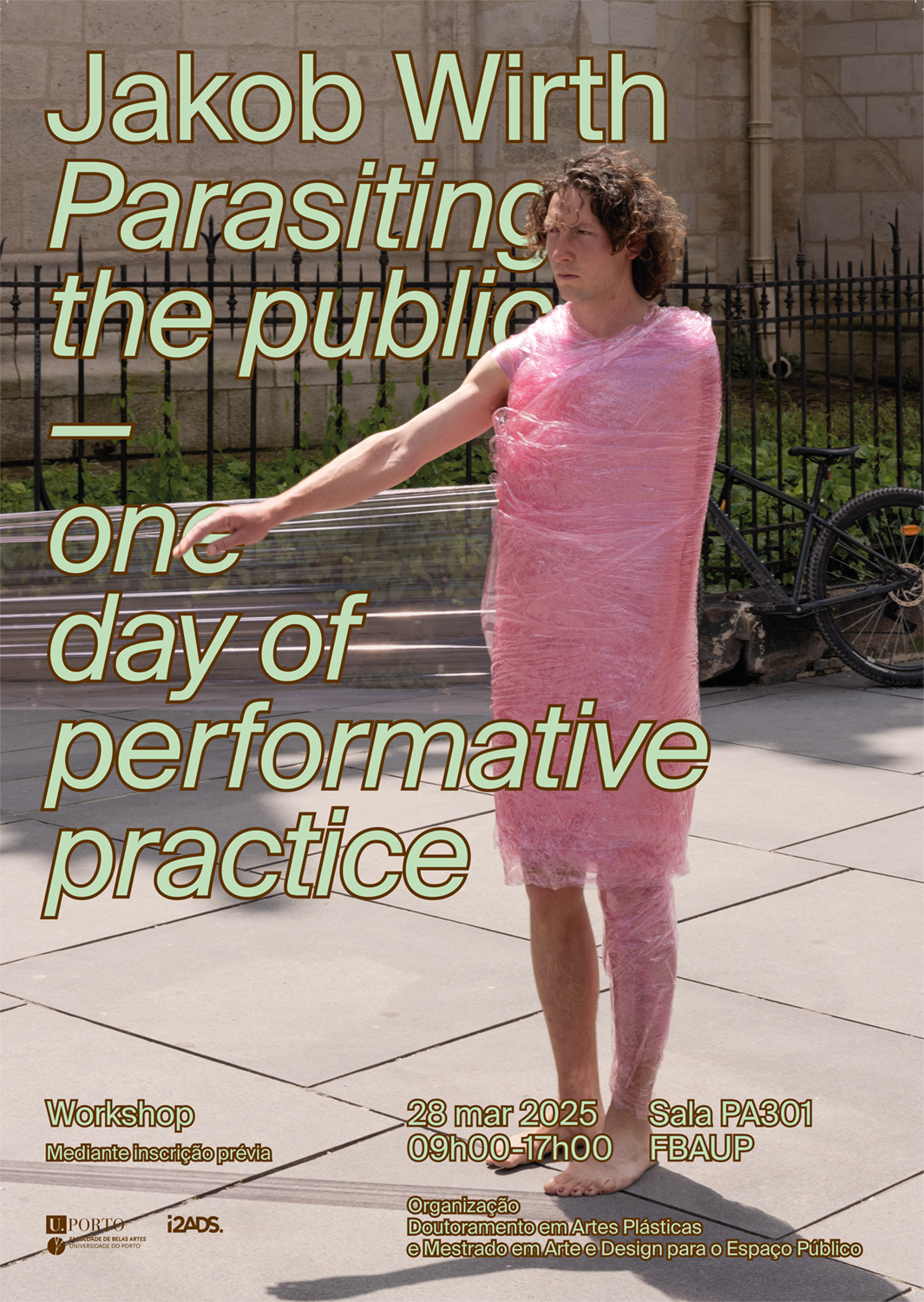
Jakok Wirth (Workshop)

In the workshop we will explore performative ways of intervening and irritating the public and work on deconstructing our own constraints. Starting from little exercises to collective rehearsals in the public space. We will thereby focus on the political statements you will bring to the workshop as a starting point and try to find a collective way to express it in the public of Porto in the afternoon. So please come prepared, full of interest in getting into the public (further details you will receive in the email after inscribing).

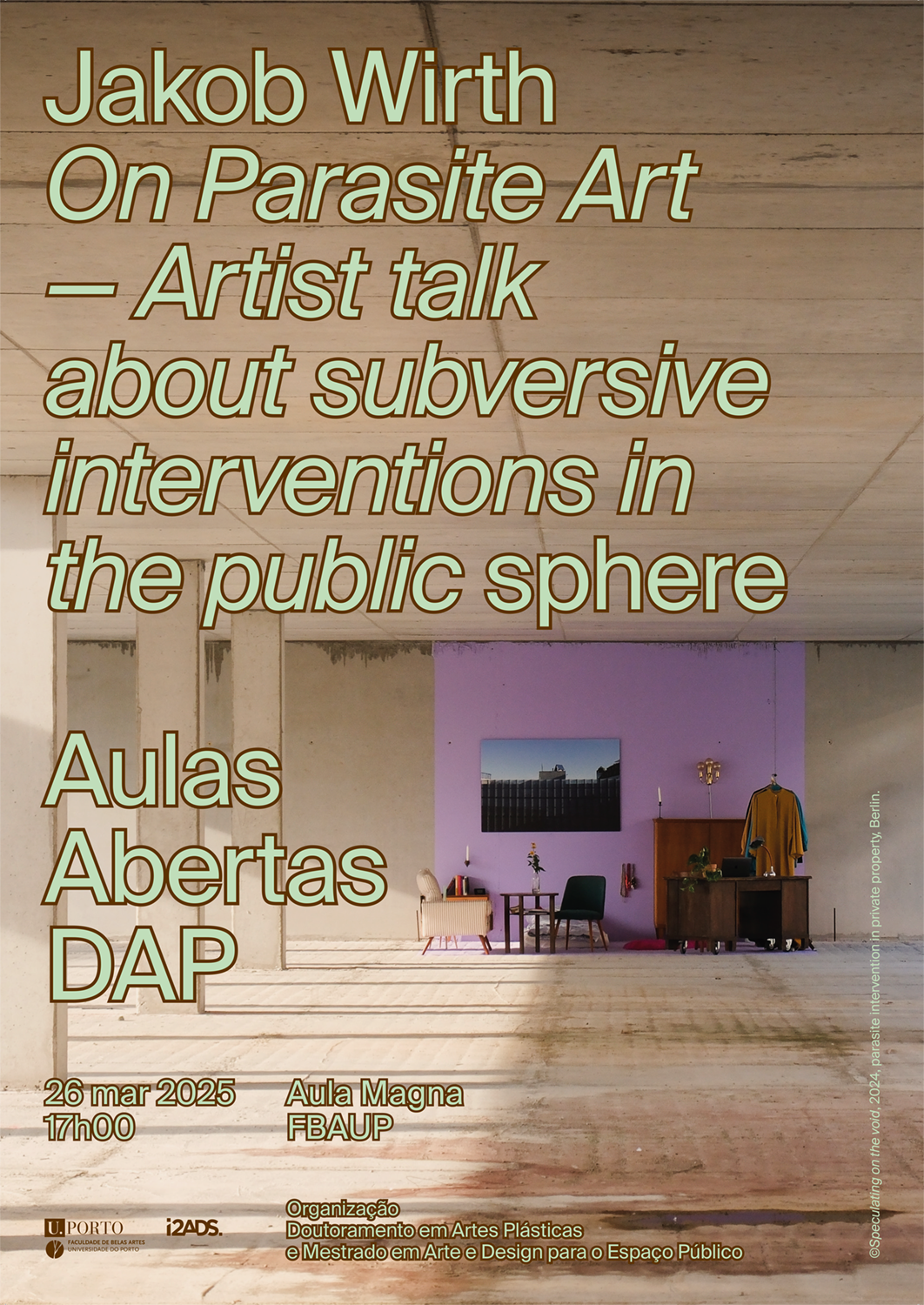
Jakob Wirth

How do we manage to stay resistant in times where irritation becomes innovation and critique a corporate culture. Focused on artistic resistance within dominant systems such as the market, my artistic practice and research challenges traditional notions of appropriation, proposing that being “already appropriated” becomes a strategic tool for Parasite Art and subversive practice.
In the lecture I will elaborate on parasitic tactics (Maria Lugones, de Certeau) to gather different ways of subversive practice, as well as give an overview on the genealogy of the parasite as a social figure and theoretical concept (Michelle Serres, Chantal Mouffe). In the presentation I will mainly focus to my personal artistic projects weaving them together with theory and will explore how artistic research can support a grounded critical artistic practice.

Wilfredo Prieto (Workshop/Masterclass)

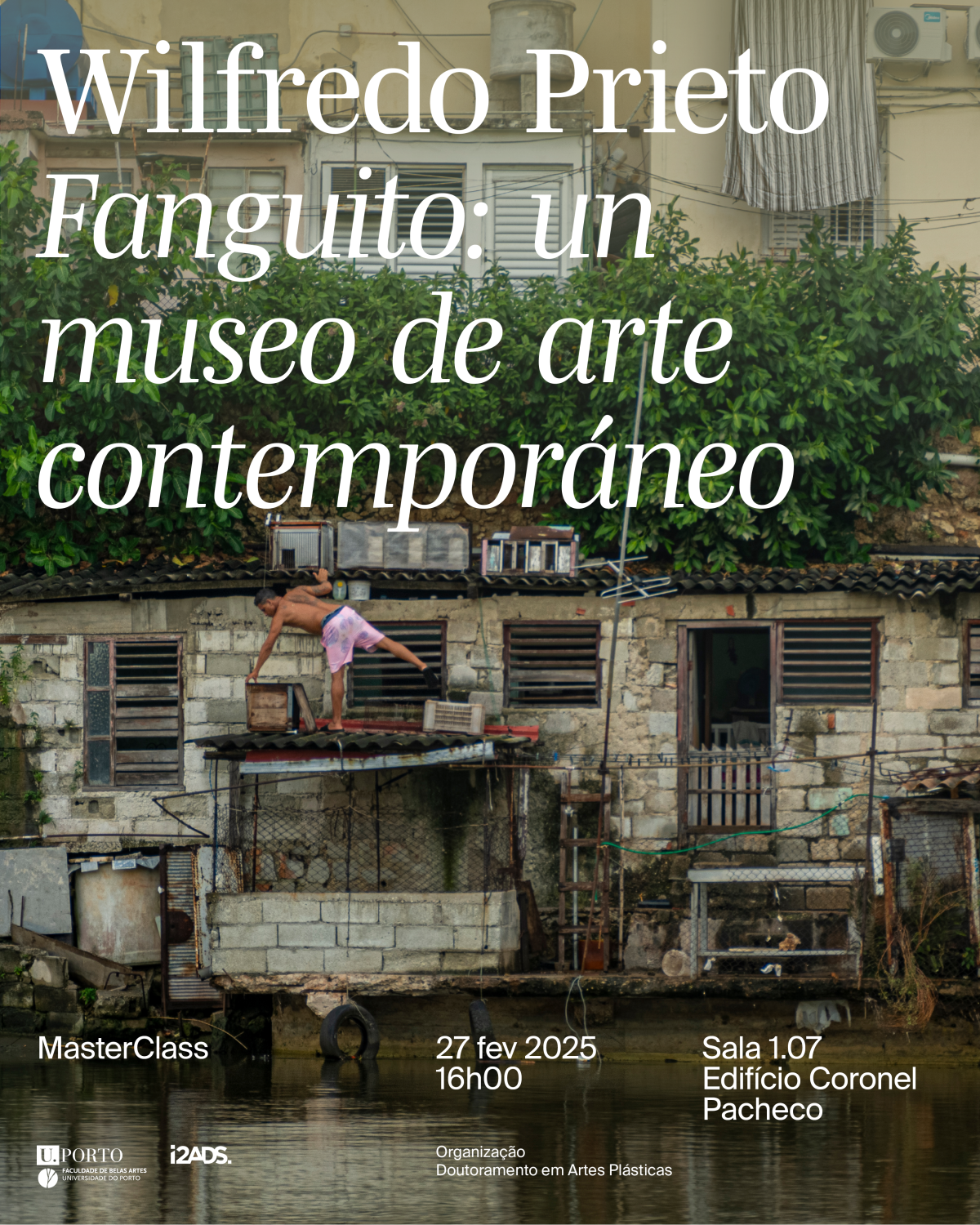
Fanguito: un museo de arte contemporáneo
Fanguito, es un proyecto que acerca el arte contemporáneo a la comunidad desde otra perspectiva del lenguaje artístico. Subvierte los códigos tradicionales del museo, el espacio expositivo canónico, las normas curatoriales y los proceso de montaje. Las obras adquieren una nueva connotación, no solo por su entorno, sino también por la interacción con los pobladores locales y el público especializado al mismo tiempo. La exposición devuelve el objeto a su propia realidad, lo recontextualiza y lo lleva a su punto de origen. Demanda un interés social, influye en el entorno y se adentra en la vida de la gente. Las obras no solo se aprecia, sino también se viven.

Wilfredo Prieto

Wilfredo Prieto é um transgressor do meio, um recodificador do objeto e de expressões em que a ideia persiste sempre. Constrói narrativas a partir de artefactos aparentemente supérfluos, mas que escondem uma cosmologia inesgotável de signos que refletem a realidade. Explora o quotidiano e realiza uma operação cirúrgica do contexto para encontrar o que já existe e tentar modificá-lo através de intervenções mínimas. O seu trabalho fala da realidade com a realidade.

Jonathan Uliel Saldanha

A partir de alguns dos seus trabalhos, serão exploradas as temáticas recorrentes da sua prática artística. A conversa abordará processos mutáveis que interseccionam corpo, linguagem e ambiente, integrando elementos dramáticos e tecnológicos. Com a exibição de vídeos e a escuta de peças sonoras, será aprofundada a dinâmica entre sistemas humanos e não-humanos, revelando as relações que emergem nesse território híbrido.

Rafela Nicolau

The disputes between iconodules and iconoclasts in the Byzantine Empire, especially fervent between the 8th and 9th centuries, serve as a starting point for rethinking the controversies over the image from a theoretical and symbolic point of view. Because, although these confrontations represent political and theological positions (prohibition of the representation of God according to the Scriptures), by extension, we can think about the tensions that exist between the image and what the image points to —an absence, something that we make appear without being, a lack (a desire). This lack, this appearing without being, is especially present in the iconic image, the image par excellence of the invisible. This presentation aims to expose some «derivations» of these tensions in modern and contemporary art, as well as serving as a brief tour through the notion of image, taking into account its symbolic dimensions of negation, prohibition or lack.