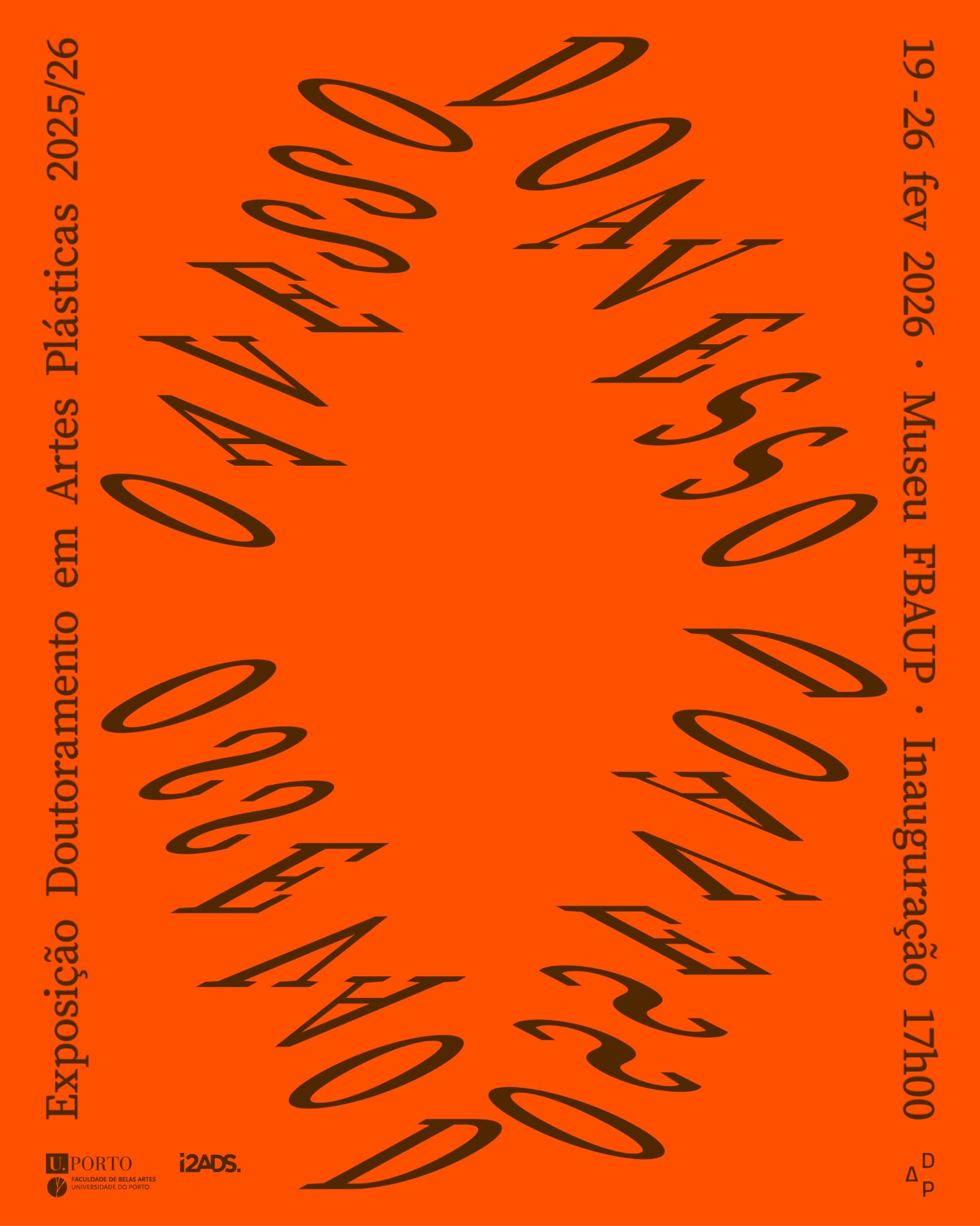
Exposição DAP
De 19 a 26 de fevereiro 2026, no Museu da FBAUP
O avesso do avesso do avesso do avesso inaugura no próximo dia 19 de fevereiro 2026, pelas 17h00, no Museu da Faculdade de Belas Artes da U.Porto (FBAUP).
O título da exposição glosa a letra de Caetano Veloso em “Sampa”, música na qual a repetida repetição da ideia de avesso, da dobra que nos leva ao avesso das coisas, serve de imagem à complexidade das grandes cidades. No entanto, na preparação desta exposição tivemos em conta não apenas essa ideia de complexidade, mas também aquilo que se esconde por detrás dos mecanismos processuais da própria arte, nos seus bastidores e zonas de sombra que são assim dobrados e voltados a dobrar como uma peça de tecido na mesa do alfaiate, deixando ver os cortes, as dobras, as marcas e as anotações de que a arte também se faz.
O avesso do avesso do avesso do avesso é a habitual exposição anual dos estudantes de 1º ano do Doutoramento em Artes Plásticas (DAP) no Museu da FBAUP. Coordenada por Miguel Leal, reúne uma série de trabalhos diversos na sua natureza e nos meios que convocam para a sua materialização, um espelho do caleidoscópio de práticas que encontram o seu lugar no DAP.
ARTISTAS PARTICIPANTES
Alexandra Costa || Amanda Copstein || Artur Prudente || Bruno Mesquita || Filipe Volker Marques || Inês Amorim || Letícia Maia || Luísa Abreu || Marcelo Reis || Pedro Bastos || Tânia Dinis || Zhenghang Fu
No dia da inauguração, será também lançada a publicação da exposição DAP What Lies Ahead, realizada o ano passado também no Museu da FBAUP.
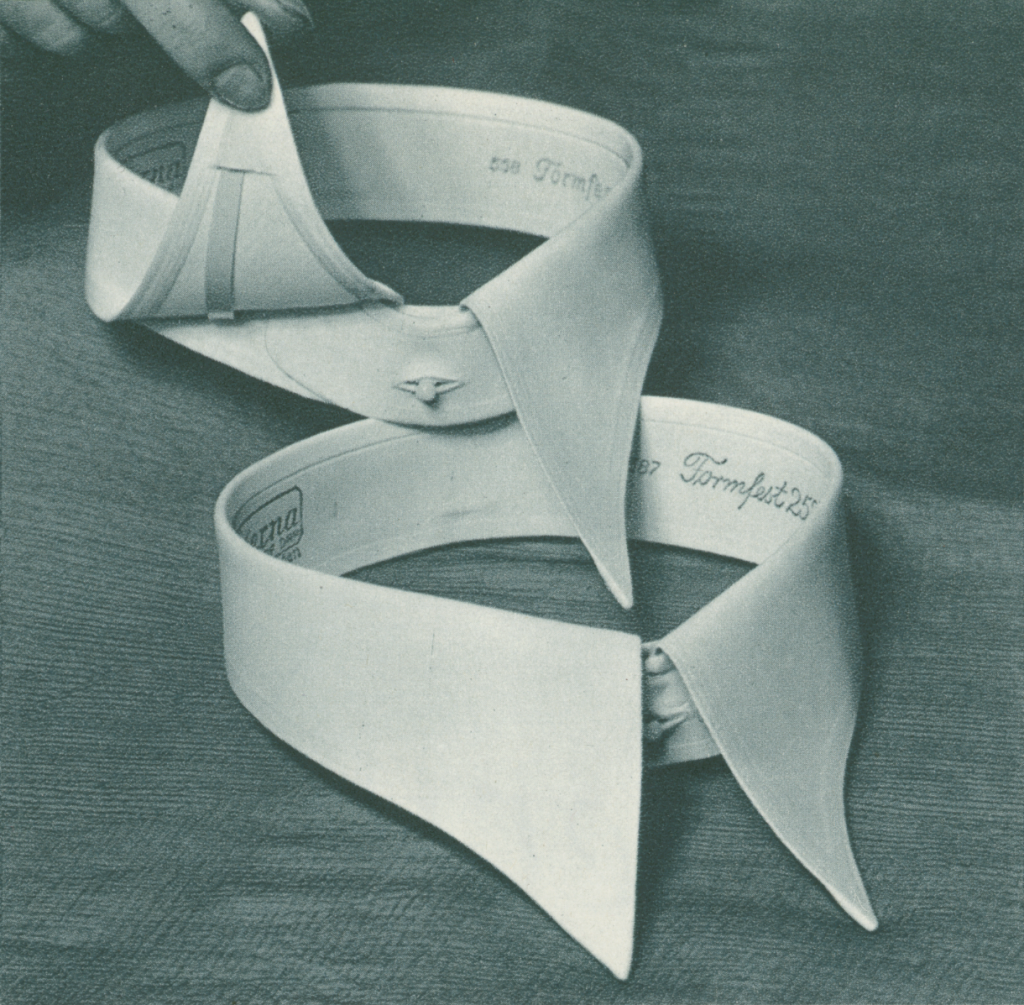
Figure 1 – Semi-rigid Eterna collar, 1960s. Germany.
The infinite fold
We need not recall that water and its rivers, air and its clouds, earth and its caverns, and light and its fires are themselves infinite folds, as El Greco’s painting demonstrates.[1]
Gilles Deleuze
When I think of folds, cuts and mends, I remember my childhood and the pieces of cloth folded and unfolded on large wooden tables. The fabrics came down from the shelves and were unrolled or opened there, in syncopated movements and muffled noises: pam pam pam. Each new piece had its own very particular smell: cotton, corduroy, twill, silk, gabardine, linen, wool, terylene… Sometimes we would sneeze or cough in that windowless room lit by flickering fluorescent lights. After choosing the right fabric, which required going outside several times, in daylight, to see the colours as they were, came the tchic tchic tchic tchic of the large scissors, handled by experienced hands. The fabric was then wrapped in thick paper and tied with white string, finished with a bow. The customers left and the pieces returned to their places, sliding with a characteristic sound onto the shelves, where they were arranged by colour and type of fabric, leaving a label yellowed by time and beautiful calligraphy, somewhat gothic, hanging. The fabrics were stored higher up or lower down, requiring constant coming and going. The ladder slid along the large shelves mounted in the lofty room. These fabrics then appeared transformed, as if by magic, into pieces of clothing. Shirts, many shirts, with impeccable collars, blouses, pyjamas, coats and raincoats, trousers, skirts or dresses. The men cut and, on the other side of the building, in narrow rooms, the women sewed. In between, the pieces were turned and turned over, time and time again, between fittings and basting, between needles and pins, chalk marks, loose threads. For a layman, it was not easy to read those sketches or to distinguish right from wrong, so many were the folds and so many were the reverses of the reverses.
The busiest time in the warehouse was Balance Week, at the beginning of each year. All the pieces were taken down to the tables and, one by one, the stock was checked, shortages were discovered and the remaining metres were calculated. These were the most hectic days of the year. The warehouse was literally turned inside out. In front of the shop, too, everything was taken down from the shelves. Endless lists were crossed off and books were filled in. Momentarily, everything was out of place. Controlled chaos.
At other times, during quiet hours, table football was played on the large tables, with the limits of the pitch marked with shirt collar interlining or unused cardboard boxes. The buttons, in two teams of different colours, slid smoothly across the wooden surface and drew variable constellations on the horizontal tabletop. With luck, one could spend hours playing this game. The arrival of a customer meant starting all over again. Even today, I cannot think of that table without thinking of the idea of play, the game of fabric folds and constellations drawn by the buttons.
The folds of the fabrics, the hems, the linings, the reverse side of the fabrics, the basting stitches and, above all, the curves, drapes and more or less wild contortions of the loose cloths, which thus reveal an autonomous life, separate from the bodies that wear them, have something baroque about it. In other words, amid all the order of these operations, between the shelves where the pieces of fabric were stored, the table where they were opened and cut up, and the rooms where intricate garments were crafted from this raw material, there was room for the affirmation of the material and even, why not, for the revelation of an almost organic plasticity. There is something in this liberation of the material that brings it closer to the potential images that form in the skies and their constellations, on the earth and its shapeless shadows, in the ink that spreads on paper and its unpredictable stains. These potential images are of the nature of the random and free play of oracles, of dice thrown on the table and, of course, of the infinite folds of planes, of their reverses of the reverses of the reverses of the reverses. I say this because when I played buttons on that table, in moments of boredom, the table and the buttons, the material of the table and the pieces, were also internalised by the game[2]. I say this because the game of folded and unfolded pieces of fabric on the table, in that repetitive back and forth, was also another play, between the calloused hands that cut and the delicate hands that darned, basted and sewed. You cannot play without becoming the material of the game.
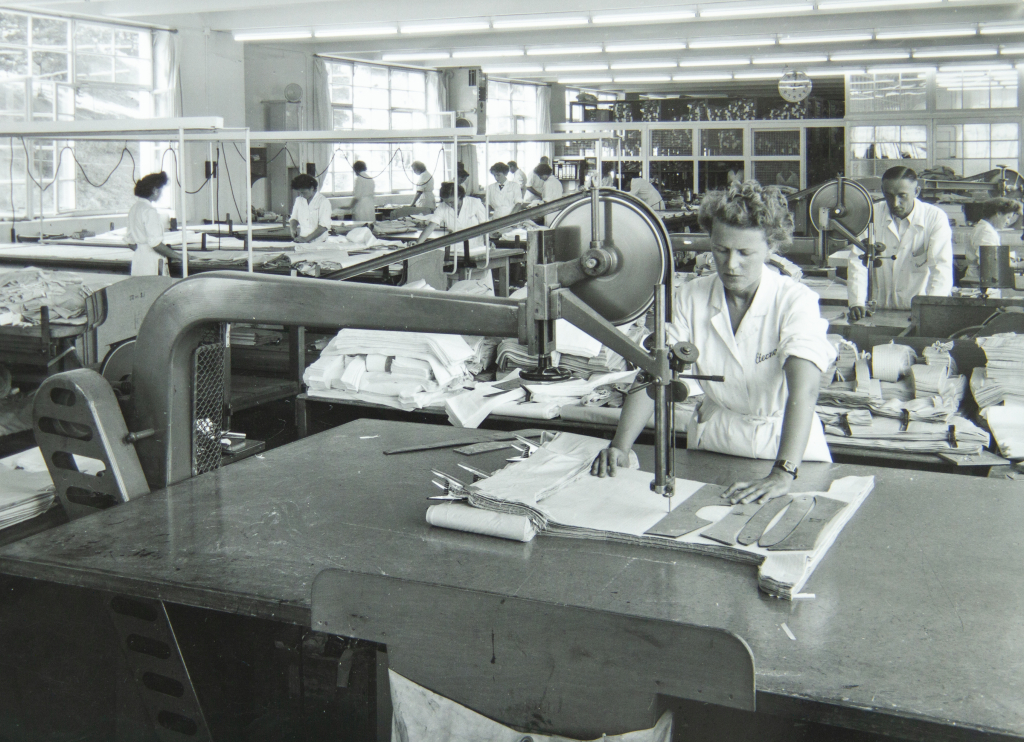
Figure 2 – Eterna factory, Passau, Germany, 1950s.
This short story tells us about the power of these more or less hidden places where things are turned inside out as a way of becoming, it tells us about how these backstage areas reveal the power of the processes of becoming, of transformation. Those things and those processes are in fact transformists. The folds of sewing, in its multiple operations of folding and unfolding, wrapping and unwrapping, opening and closing, are the constants of a process that reveals and hides itself with each new fold. To be on the other side, around the cutting or the sewing tables, is to be in a place where front and back are mixed up, where process and finished product are mingled. Making and unmaking, turning and turning again are normal operations in the processes of transforming matter into something else. Those processes fold and unfold the plane, one time after the other.
The transformative processes of art, from the studio to the exhibition space, from behind the scenes to the stage, from the plateau to the screen, are also a game of folds and reversals, a play of implausible constellations shaped in-between revealing and concealing, in-between opening and closing. The last few decades, especially since the 1960s, have been abundant in this openness to processes, from the idea that attitudes become form to the affirmation of the phenomenology of doing as part of the work, or to the gesture as mere enunciation. In this way, the lines that stubbornly sought to separate everyday gestures from art are blurred. Such a thing is done, for example, through the incorporation of ephemerality or the power of multiplicity, from the agency of materials to the participation of the public, going through many other strategies in which we turn things inside out over and over again, to the point where we lose our ground and no longer know where we are, because maybe that doesn’t matter so much anymore. Processes are revealed and contexts are brought into conversation. What is hidden is revealed and what is seen is hidden or refused. Front and back, process and finished thing are mixed up. Perhaps the very idea of the studio, the backstage or the plateau, as places of rehearsal, reserved and half-secret, where the work is whispered in multiple reversals, is now largely obsolete. Or perhaps not, because its place may have simply shifted and is now everywhere, anywhere. Separate or indistinct, localised or dispersed, it is difficult to think of an artistic gesture without the enigma of a reverse side that cannot be distinguished from its other side; it is difficult to think of this gesture without the power of an infinite fold.
The title of the exhibition refers to the lyrics of Caetano Veloso’s ‘Sampa’ (1978), a song in which the repeated repetition of the idea of the reverse side, of the fold that takes us to the flip side of things, serves as an image for the complexity of large cities. However, in preparing this exhibition, we took into account not only this idea of complexity, but also what lies behind the processual mechanisms of art itself, in its backstage and shadow areas, which are thus folded and unfolded like a piece of fabric on a tailor’s table, revealing the cuts, folds, marks and notes that art is also made of. In its own way, each of the works in this The Reverse of the Reverse of the Reverse of the Reverse [O avesso do avesso do avesso do avesso] is a naked presentation of this idea, embodied in the objects spread throughout the exhibition spaces, united and separated at the same time by the hundreds and hundreds of glass marbles scattered across the floor, a constellation of shining points that are like an oracle that challenges us, and the works.
Miguel Leal, Afife, February 2026
[1] [Our translation] DELEUZE, Gilles, Le Pli. Leibniz et le Barroque, Paris, Les Éditions de Minuit, 1988, p. 165.
[2] Cf. DELEUZE, idem, p.90.