Germinality
Aula Magna da FBAUP
Quinta-feira, 5 de Novembro de 2o26, às 17.30
Uma parceria com a RAMPA, no âmbito do programa SONDA, com curadoria de Alexandra Balona e Susana Gaudêncio.
In the course of this talk, I propose a reappraisal of the various senses of germinality, a term for the vegetal future that cannot be reduced to the realization of latent potentialities. It will be necessary, for example, to place it side by side with Arendt’s natality, as well as within the broader field of vegetality. Natality values the free and spontaneous beginning (the taking of initiative), whereas germination begins in the middle, among ashes and remains, through decomposition and the difficult initiation of a neophyte. Passing through the Eleusinian Mysteries, the Book of Job, Saint Paul, and the ecology of invasive species, we will ask what changes, for art and for design, when public space is read under the lens of germinality: as soil, a mixture of seeds in dormant and germinal states, or a place of new beginnings. Seeds carry the past within their coats, where the present and the future are at once continuous and discontinuous with what has already happened. And so do we, I argue.
BIO
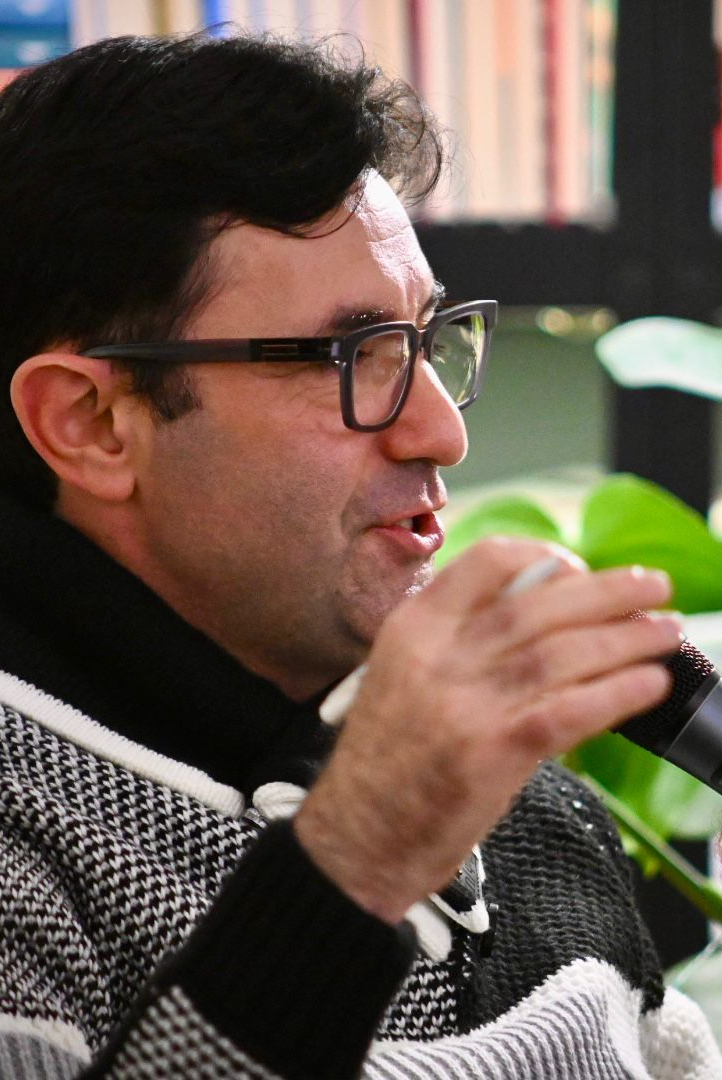
Michael Marder is IKERBASQUE Research Professor in the Department of Philosophy at the University of the Basque Country (EHU), Vitoria-Gasteiz. His writings span the fields of ecological theory, phenomenology, and political thought. His most recent books include The Phoenix Complex (2023), Time Is a Plant (2023), with Edward S. Casey, Plants in Place (2024), Eco-Freud (2025), Metamorphoses Reimagined (2025), with Anais Tondeur, Fiori di fuoco (2025), and Of Joints and Other Articulations (2026). More information at michaelmarder.org.